Tracing the Complete Journe of Patient Compliance in Obstructive Sleep Apnea Management: A 12-Year Retrospective Study on DiaHgnosis, Device Adherence, and Treatment Outcomes Adel Hamdan
Authors


Published
October 19, 2026
Paper ID
PAP-000322
Status
Published
DOI
10.65712/tmj.3758414
Advance Services
Abstract
Background: The incidence of obstructive sleep apnea is rising globally, with significant health repercussions. Current research falls short in chronicling the complete trajectory of obstructive sleep apnea management, specifically, the intricacies of patient adherence to device therapy post-diagnosis.
Objective: This study aims to bridge the gap, providing a detailed analysis of the journey from diagnosis to consistent therapeutic device use, and identifying potential delays and patterns of adherence.
Methods: A retrospective observational study was conducted at Rashid Hospital's sleep study lab, Dubai, United Arab Emirates, spanning from 2010 to 2022 and encompassing 1,949 patients. The study population consisted of all patients referred for sleep testing on the basis of a high clinical suspicion of obstructive sleep apnea. Data were extracted from the hospital’s Healthcare Information System, focusing on demographics, sleep study results, and device usage patterns. Data were analyzed using Python's Pandas library to evaluate compliance and treatment efficacy.
Measurements and Main Results: The study revealed that 83.4% of patients visiting the sleep lab were diagnosed with obstructive sleep apnea. Of these, 39.6% purchased a therapeutic device, but only 19.7% of the total population adhered to the recommended device usage. Treatment reduced the Apnea-Hypopnea Index to below 5 in 26.5% of the total patient cohort. An increasing trend in OSA diagnoses was observed over the years, with patients experiencing an average delay of 1.3 years before initiating therapy.
Conclusion: The study addresses a significant gap by detailing the patient journey from obstructive sleep apnea diagnosis to treatment, highlighting device acquisition delays and adherence challenges. It underscores the need for integrated care models considering socioeconomic factors and patient education to improve outcomes for obstructive sleep apnea.
Introduction
Obstructive sleep apnea (OSA) is a prevalent sleep-related breathing disorder characterized by repeated episodes of partial or complete obstruction of the upper airway during sleep, leading to significant reductions in blood oxygen saturation and disruptions in sleep architecture [1]. OSA is associated with a multitude of cardiovascular, metabolic, and neuropsychiatric risks, including hypertension, coronary artery disease, diabetes, and depression [2].
Globally, the prevalence of OSA has shown an alarming increase, with estimates suggesting that nearly 936 million adults worldwide suffer from mild to severe OSA, affecting approximately 3-7% of men and 2-5% of women [3]. OSA is commonly linked with obesity, metabolic syndrome, and conditions like hypertension that not only contribute to cardiovascular disease but also exacerbate the activation of the sympathetic nervous system, oxidative stress, endothelial dysfunction, and metabolic disturbances [3].
The journey of an OSA patient extends far beyond the initial sleep study. Current literature often neglects the full continuum of care, which includes diagnosis, the acquisition of Continuous Positive Airway Pressure (CPAP) or Bilevel Positive Airway Pressure (BiPAP) machines, adherence to recommended usage of these devices for more than four hours daily, and long-term follow-up to evaluate treatment efficacy and make necessary adjustments [4]. The Apnea-Hypopnea Index (AHI) classifies OSA
severity into four categories: normal (< 5 events/hour), mild (5–14.9 events/hour), moderate (15–29.9 events/hour), and severe (≥ 30 events/hour). These categories help in assessing the extent of sleep apnea and guide appropriate treatment decisions, classifications are based on established guidelines from the American Academy of Sleep Medicine (AASM) [1]. This retrospective observational analytical study aims to delve into these aspects by detailing the complete cycle of care from initial diagnosis through long-term management, thereby filling significant gaps in our understanding of patient-device interaction and overall treatment adherence [5].
Our research utilizes comprehensive data from Rashid Hospital, United Arab Emirates. This data spans a twelve-year period from 2010 to 2022, capturing all patient data and interactions with the sleep lab during this time. In Rashid Hospital, polysomnography (PSG) and CPAP therapy are not covered by government or private insurance, unlike some hospitals in other emirates that do provide such coverage, though they are geographically distant. Since CPAP is not covered at our facility, there is no specific AHI threshold required for insurance purposes. It is indicated that patients should follow up initially within two weeks after starting CPAP for the assessment of response to treatment, then are recommended to revisit every 3-4 months. In patients who refuse the use of CPAP therapy, there are currently no alternative treatments offered. This research is not limited to diagnostic metrics but includes extensive information on CPAP and BiPAP usage and patient compliance, providing a unique insight into the longitudinal management of OSA [6]. The main purpose of this study was to comprehensively evaluate patient compliance with therapeutic device use and factors in treatment adherence over a 12-year period.
Materials and Methods
This retrospective observational study was conducted at Rashid Hospital's sleep study lab located in Dubai, United Arab Emirates. The study spanned a twelve-year period, from 2010 to 2022. The study included all patients who visited the sleep lab during this time frame and were referred to the sleep clinic for a diagnostic sleep test due to high clinical suspicion of OSA, based on clinical assessments and symptomatology.. Ethical approval for the study was granted by the ethical committee at Rashid Hospital, ensuring adherence to the ethical standards of medical research.
Data Collection
Data were systematically extracted from the hospital’s Healthcare Information System. The extraction process was divided into three main parts: demographic information of the patients, data from the initial sleep studies conducted upon their first visit, and data extracted from devices that were returned by the patients for analysis. These devices, which were used in the treatment of diagnosed sleep disorders, primarily involved CPAP and BiPAP machines. Routine diagnostic polysomnography and split-night studies were performed on the patients.
The study included consecutive patients who completed the sleep lab evaluation and had complete data available. Patients under the age of 18 and those with incomplete sleep lab data were excluded from the analysis. A total of 1,949 patients were included in the study over the twelve-year study period. This comprehensive diagnosis enabled the collection of longitudinal data concerning the effectiveness of treatment modalities and patient compliance with prescribed therapies.
Data Analysis
The data were analyzed using the Python programming language, employing the Pandas library. This approach allowed for sophisticated statistical analyses, including the tracking of patient compliance over time and the correlation of demographic factors with treatment outcomes.
Results
This study meticulously traced the obstructive sleep apnea (OSA) treatment journey for 1,949 patients over a twelve-year period, encapsulating intricate details from the initial sleep study to long-term device utilization.
General Demographics of Patients at the Time of Sleep Study
The average age of patients undergoing sleep studies was 47.5 years with a standard deviation of 14.6, indicating a broad age range among the study participants (Table 1). Among them, 1074 (55.1%) were male and 875 (44.9%) were female.
Body Mass Index (BMI) classifications showcased a notable inclination towards higher obesity categories, with only 0.8% of patients categorized as underweight and a substantial 35.6% falling into the Obesity Class III category. The distribution across other BMI categories was as follows: 5.9% in the normal range, 17.9% overweight, 22.8% in Obesity Class I, and 17.0% in Obesity Class II.
The assessment of AHI revealed that 16.6% of patients had a normal range (AHI < 5), while the rest were distributed across mild (26.0%), moderate (25.8%), and severe (31.7%) OSA categories. This distribution emphasizes the high prevalence and severity of OSA within the patient population at our sleep lab.
| Category | Statistics, N = 1,949 |
| Age (Patients doing sleep study) | 47.5 (14.6) |
| Gender, count (%) | |
| Male | 1,074 (55.1%) |
| Female | 875 (44.9%) |
| BMI, count (%) | |
| Underweight (BMI < 18.5) | 15 (0.8%) |
| Normal (BMI 18.5–24.9) | 115 (5.9%) |
| Overweight (BMI 25.0–29.9) | 349 (17.9%) |
| Obesity Class I (BMI 30.0–34.9) | 444 (22.8%) |
| Obesity Class II (BMI 35.0–39.9) | 331 (17.0%) |
| Obesity Class III (BMI ≥ 40.0) | 695 (35.6%) |
| AHI, count (%) | |
| Normal (AHI < 5) | 323 (16.6%) |
| Mild (AHI 5–14.9) | 506 (26.0%) |
| Moderate (AHI 15–29.9) | 502 (25.8%) |
| Severe (AHI ≥ 30) | 618 (31.7%) |
Patient Journey and Time Series Analysis
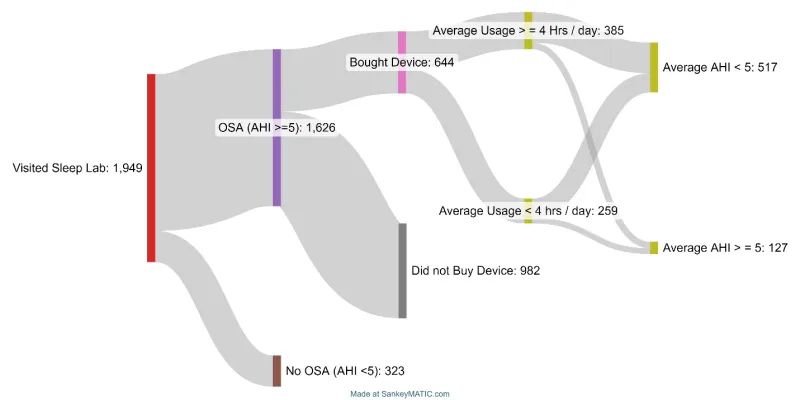
The Sankey plot (Figure 1) meticulously maps the trajectory of patients from their initial visit to the sleep lab through the various stages of OSA management. Initially, out of the 1,949 patients assessed at the sleep lab, a significant proportion, 1,626 patients (83.4%), were diagnosed with OSA (AHI ≥ 5), and 323 patients (16.6%) had normal AHI values (AHI < 5). Among these diagnosed patients, 644 (39.6% of those diagnosed with OSA and 33.0% of the total population) took the step to purchase a therapeutic device.
It's notable that out of the patients who bought a device, 385 (59.8% of those who purchased a device and 19.7% of the total population) demonstrated compliance with average usage of 4 or more hours per day. On the other hand, 259 patients (40.2% of those who purchased a device and 13.3% of the total population) fell below the optimal usage threshold.
In the context of treatment outcomes, 517 patients achieved an average AHI < 5 post-treatment, accounting for 31.8% of those diagnosed with OSA and 26.5% of the overall population. This is a key indicator of successful treatment in the cohort. Conversely, among the patients who adhered to device usage, 127 individuals (33.0% of adherent patients and 6.5% of the total population) continued to have an average AHI ≥ 5, reflecting ongoing challenges in the effective management of their condition.
hfhg bkjthdrfnt g ukjthfbgukjrthnfkj ,m
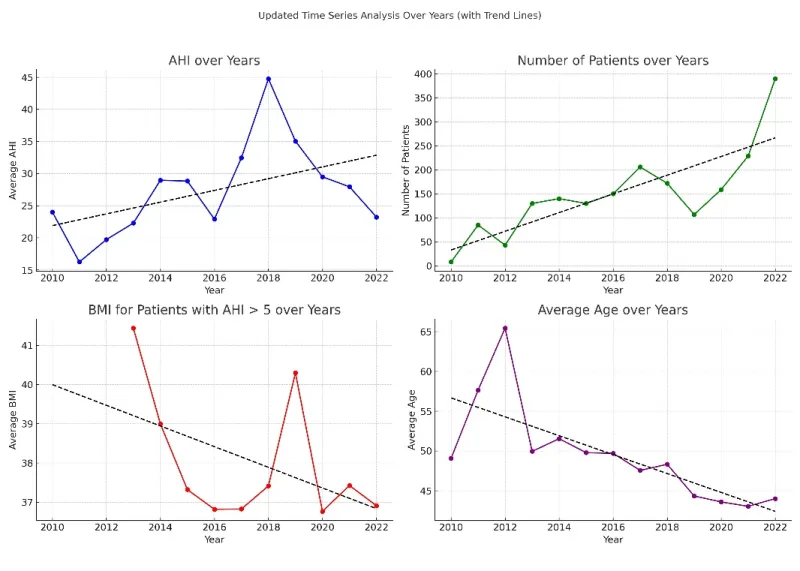
The temporal trend analysis exhibited an escalation in both the number of patients and the severity of OSA over the years (Figure 2). The average AHI fluctuated, spiking at certain intervals, whereas the average BMI for patients with AHI > 5 showed an overall downward trend over the years. Correspondingly, the average age of patients decreased progressively, indicating an expanding younger demographic grappling with OSA. Notably, in 2018, there was an increase in BMI due to a heightened preoperative evaluation for bariatric surgery as part of a gastric bypass program. In 2019, the number of working sleep labs in the hospital increased from one to two, which caused a higher capacity for patient intake.
of Patients, BMI , Age over years in sleep lab
Device Usage Results
Patients took an average of 1.3 years to decide to purchase a CPAP or BiPAP device after their sleep study and initial diagnosis. The cycle time for providing the prescription for the device to patients after the sleep study is less than or equal to 2 weeks. The devices, when bought, were used for an average duration of 7.5 months before data extraction. Notably, the average daily usage was 4.6 hours, suggesting a reasonable level of adherence among those who opted to utilize the device. However, as seen in the Sankey plot, the adherence varied, with 40.2% using the device for less than the recommended 4 hours daily and a more compliant 59.8% exceeding the 4-hour threshold (Table 2).
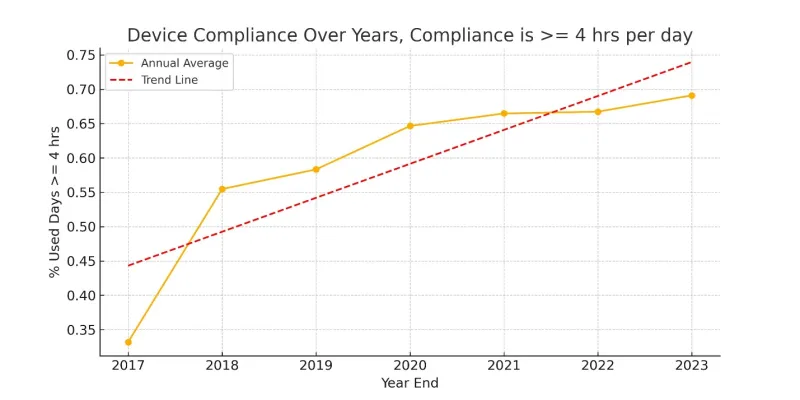
Furthermore, the time series plot (Figure 3) illustrates a trend in device compliance over the years, focusing on usage of 4 or more hours per day. From 2017 onwards, there has been a gradual increase in the average percentage of days where devices were used for at least four hours, indicating an improving trend in patient compliance.
| Details | Duration/jhb ghbvfjn |
| Waiting time to decide to buy the device | 1.3 years |
| Duration device was used before data extraction | Average 7.5 months (standard deviation = 6 months) |
| Average daily usage of the device | 4.6 hours |
Regression Analysis and Device Usage Patterns
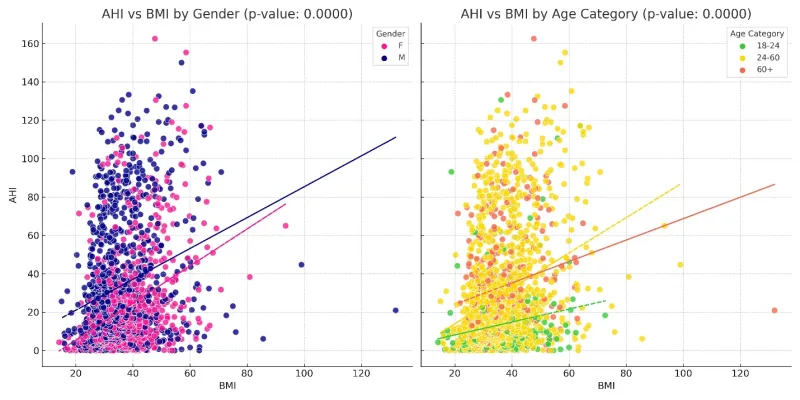
The regression analysis of Apnea-Hypopnea Index (AHI) versus Body Mass Index (BMI) by gender and age category (Figure 4) underscored significant correlations, with p-values reaching statistical significance. The plots revealed that higher BMI values are associated with higher AHI scores, and this trend is consistent across different age categories.
The boxplots depicting device usage patterns (Figure 5) delineated the age distribution across various categories of device usage. While the median age remained relatively stable, the interquartile range suggested a broader age spectrum among those with lower device usage, a pattern worth noting for future compliance interventions.
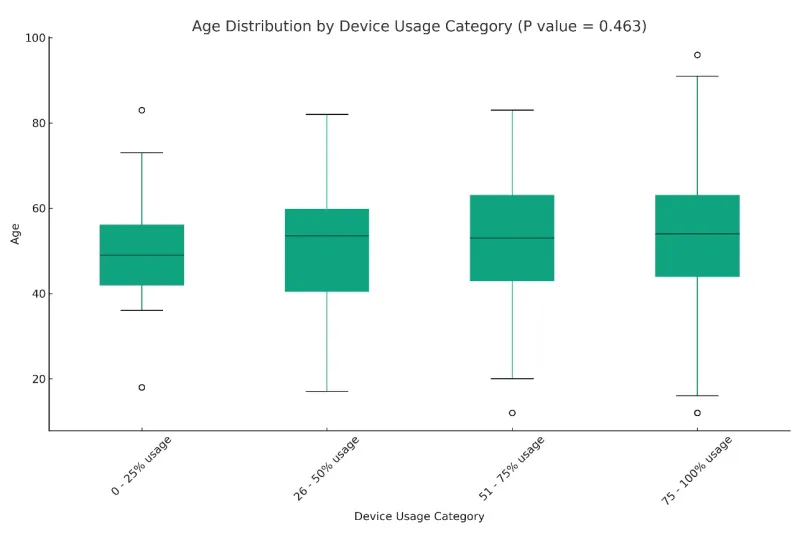
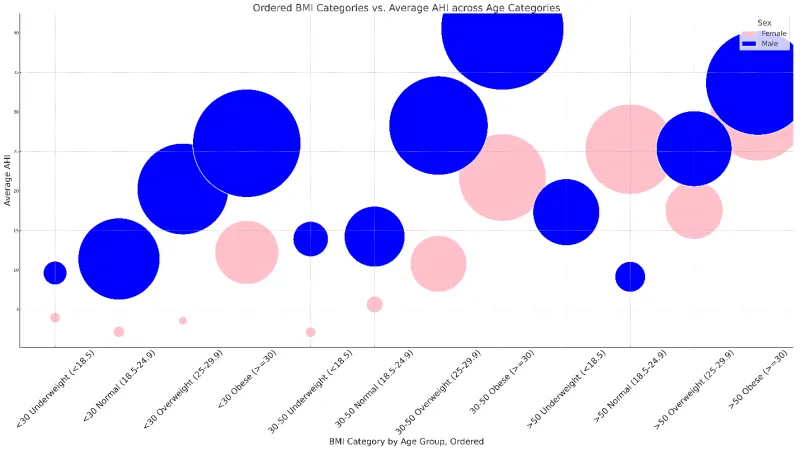
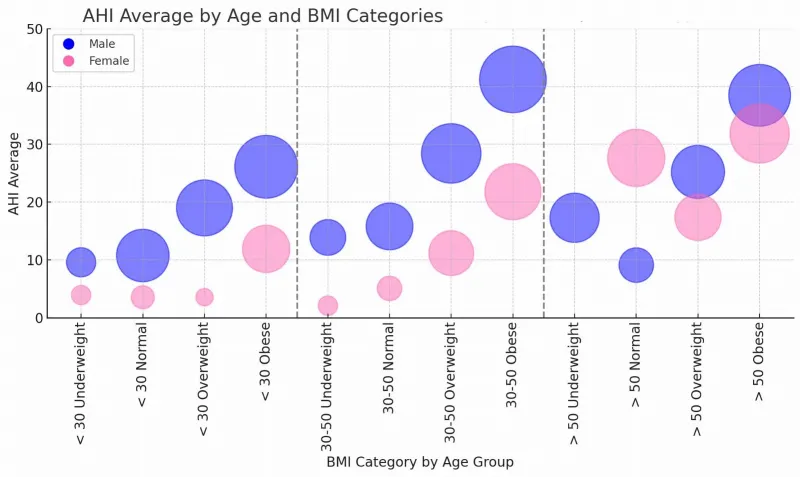
Figure 6 provides a detailed analysis of the variation in the Apnea-Hypopnea Index (AHI) among different cohorts categorized by age, Body Mass Index (BMI), and gender. Each bubble's position on the x-axis represents the BMI category within specific age groups (<30, 30-50, and >50), ordered from underweight to obese. The y-axis indicates the average AHI for each cohort. The pink bubbles represent females, while the blue bubbles represent males. The size of each bubble corresponds to the standard deviation within that group, indicating the variability of AHI around the mean.
The data shows a clear trend of increasing AHI with higher BMI categories across all age groups and genders, reflecting the well-known correlation between obesity and sleep apnea severity. Males generally have a higher average AHI compared to females within the same BMI and age categories, suggesting gender-specific physiological differences in the manifestation of sleep apnea. Notably, the largest bubbles, indicating the highest variability, are seen in the obese category across all age groups, particularly among males. This suggests that while obesity is a significant modifiable risk factor, there are also substantial individual differences within this group, possibly due to other modifiable factors such as lifestyle, or non-modifiable factors such as genetic predisposition and anatomical differences.
Discussion
This study's findings cast a spotlight on the complexities inherent in the management of OSA, a multifaceted condition that demands comprehensive care strategies. The data indicate that despite a high diagnostic rate within our population, there is a palpable disconnect in translating diagnoses into timely and effective treatment actions.
Detailed Analysis of Results
Our study observed an average delay of 1.3 years before patients acquired a CPAP or BiPAP device post-diagnosis. These delays may be attributed to a variety of reasons: financial constraints, perceived inconvenience, and an OSA management approach that does not emphasize phenotypic consideration. In relation to the latter, it pertains to treatments not directed to certain specific characteristics or attributes in a patient, where anatomical, physiological, or genetic differences may result in inappropriate device choice and reduced interest by the patient in the therapy [7]. This may be the reason why a tailored approach decreases the latency to initiation and improves adherence rates. The economic impact, including the cost of devices and insurance coverage issues, represents significant barriers to device acquisition and has been documented in several health economic studies [7,8].
One of the main observations in our study was the secular trend for the increase in the diagnoses of OSA within the period of 12 years. The increase in the rate of diagnosis may be attributed to factors such as the expansion of our sleep laboratory facilities in 2019, which serves to improve capacity and hence allows more patients to be evaluated prompltly. Moreover, better awareness among health practitioners and the general population of the health risks due to OSA likely increased the rate of referral and self-reporting [2,3]. The growing prevalence of obesity worldwide—a major risk factor for OSA [9], may increase the prevalence even more in our patient population. Additionally, age and gender have emerged as significant determinants in our study, aligning with previous research indicating that the prevalence of OSA increases with age and is more common in males, which may be influenced by hormonal variations, fat distribution, and airway anatomy [10].
The presence of large standard deviations within certain groups, particularly in the obese category, points to the influence of unknown or less understood factors that could be affecting AHI variability. These could include differences in fat distribution, muscle tone, upper airway structure, and the presence of comorbid conditions like diabetes or hypertension. The data indicates that as BMI increases, the impact of these various factors becomes more pronounced, highlighting the complexity of managing sleep apnea in obese patients. Furthermore, the trends observed in the younger age group (<30) suggest that early intervention and lifestyle modifications could play a critical role in preventing the progression of sleep apnea severity. Overall, the graph underscores the multifaceted nature of sleep apnea, where both modifiable (BMI, lifestyle) and non-modifiable (age, gender) factors contribute to its variability, necessitating a comprehensive and personalized approach to treatment.
Compliance Challenges
Adherence to device use remains a substantial challenge. Among device owners, only 59.8% met the recommended threshold for usage, which may stem from factors such as discomfort, inconvenience, and psychosocial issues such as stigma [11]. Age appeared to have a non-significant correlation with device usage patterns, suggesting that age-related factors alone do not predict adherence levels. This finding diverges from certain studies that report better compliance among older patients, potentially due to greater health awareness or more severe symptoms [12].
Addressing Compliance and Time to Device Acquisition
Solutions to improve compliance have been explored in other research, including the use of telemedicine for regular follow-ups and patient education to enhance device familiarity and comfort [13]. Interventions targeting health literacy and social support can profoundly impact patient attitudes and behaviors regarding treatment acceptance [14].
Reducing the time for device acquisition is crucial. Beyond financial considerations, psychological factors such as denial of disease severity and fear of treatment dependency are pervasive [15]. Healthcare organizations can bridge this gap through initiatives that promote early diagnosis and patient education [16]. Programs such as the American Sleep Apnea Association's CPAP Assistance Program have made strides in improving access to treatment by subsidizing costs and providing educational resources [17].
Studies have identified numerous obstacles to CPAP adherence in the treatment of obstructive sleep apnea, including discomfort and socioeconomic issues. For example, Sawyer et al. (2011) noted that targeted approaches, such as patient education, are effective in improving adherence [18]. In the same line, Weaver and Grunstein (2008) reiterated the necessity of a multidisciplinary approach in overcoming the difficulties in adherence to improve the overall treatment outcome [19].
Implications and Future Directions
The significant delays in device acquisition and variable levels of adherence among patients with OSA, depicted from the results of this study, represent multi-faceted challenges in managing the condition. This study has traced the complete patient journey from diagnosis to use of the therapeutic device, thereby highlighting some of the key gaps in the continuum of care. These socioeconomic and patient barriers are often very powerful and drive delays that suggest the need for more intensive intervention.
Both of these challenges call for an integrative and proactive approach. Increased patient education regarding the condition and its complications may have the effect of empowering individuals to make timely and relevant decisions about their treatment. General practitioners are in a position to play a key role in this respect and must become more sensitive and proactive in identifying those patients who are at risk and referring them to sleep centers without delay. Furthermore, telemedicine and remote monitoring systems would support patients continually to improve adherence rates. Interventions can be made at appropriate times when compliance issues are noted. Digital tools together with personalized care models, taking into consideration individual patient needs and barriers, may enable more consistent and effective management of OSA.
Community awareness of the disease is also necessary; it would increase public awareness of OSA and its complications, thus probably leading to early diagnosis, and instigation of treatment. Incorporating such strategies in routine practice would position health systems better amidst the complexities of managing OSA and hence improving patient outcomes.
Recommendations for Enhancing Proactivity in Sleep Centers
Sleep centers can implement routine OSA screenings for high-risk individuals and integrate these screenings into regular health check-ups. Partnering with community health programs to conduct awareness campaigns about OSA's risks and symptoms can facilitate early diagnosis. Additionally, sleep centers can develop targeted educational programs for healthcare providers, enhancing their ability to identify potential OSA cases during routine consultations and use system-based prompts to refer these patients directly to specialized sleep labs.
Suggestions for Enhancing Patient Compliance and Engagement
To improve patient compliance, sleep centers can adopt personalized care models that account for individual lifestyle and barriers to adherence. This includes flexible follow-up schedules, remote monitoring of therapy adherence, and establishing support groups for sharing coping strategies. Sleep centers should also advocate for better insurance coverage for OSA treatments to reduce financial barriers, thus increasing treatment continuation and effectiveness.
Non-PAP Options for OSA Management
Non-PAP treatments, such as mandibular advancement devices (MADs), positional therapy, weight loss, and upper airway surgeries, are all effective options for the management of OSA, especially in patients who cannot adhere or are intolerant to CPAP [20]. In our present study, 60% of diagnosed patients did not acquire a device; this fact underlines the need for available and accessible non-PAP options. Combined treatments, like MADs in combination with positional therapy, further improve results, especially in those patients with mild to moderate OSA [21].
Limitations
Despite the insights gained, our study is not without limitations. The retrospective nature imposes inherent constraints, including potential biases in data recording and the unavailability of certain longitudinal data that could affect the outcomes. Moreover, the study's focus on a single center may limit the generalizability of the findings across different demographics and healthcare systems. We recommend future multicentric studies in the United Arab Emirates to validate these findings and an exploration into the psychological and socio-economic barriers that could influence device purchase and adherence.
Conclusions
This study sheds light on the essential yet often overlooked aspects of obstructive sleep apnea (OSA) management, emphasizing the importance of timely and effective interventions following diagnosis. The observed delay in patients' procurement of CPAP or BiPAP devices and the challenge of maintaining consistent use reflect a broader narrative of patient engagement and the multifaceted nature of adherence. The journey from diagnosis to management is revealed to be fraught with hurdles, both medical and socioeconomical, which are critical to consider in the pursuit of improved patient outcomes.
In response, our findings advocate for an integrative model of care that prioritizes personalized patient education, robust support systems, and strategies that streamline and simplify the pathway to treatment. As the healthcare community continues to advance its understanding of OSA, the emphasis must be on creating a treatment landscape that not only addresses the clinical dimensions of OSA but also actively dismantles the barriers to efficient and effective care. This approach promises to optimize therapeutic outcomes and enhance the quality of life for individuals living with this complex condition.
References
- Patil SP, Ayappa IA, Caples SM, Kimoff RJ, Patel SR, Harrod CG. Treatment of adult obstructive sleep apnea with positive airway pressure: An American Academy of Sleep Medicine clinical practice guideline. J Clin Sleep Med. 2019;15(2):335-343.
- Peppard PE, Young T, Palta M, Skatrud J. Prospective study of the association between sleep-disordered breathing and hypertension. N Engl J Med. 2020;342(19):1378-1384.
- Benjafield AV, Ayas NT, Eastwood PR, Heinzer R, Ip MSM, Morrell MJ, et al. Estimation of the global prevalence and burden of obstructive sleep apnoea: a literature-based analysis. Lancet Respir Med. 2021;7(8):687-698.
- Sawyer AM, Gooneratne NS, Marcus CL, Ofer D, Richards KC, Weaver TE. A systematic review of CPAP adherence across age groups: clinical and empiric insights for developing CPAP adherence interventions. Sleep Med Rev. 2018;12(6):343-356.
- Stepnowsky C, Palau JJ, Marler MR, Gifford AL. Pilot randomized trial of the effect of wireless telemonitoring on compliance and treatment efficacy in obstructive sleep apnea. J Med Internet Res. 2019;15(5):e111.
- Shaukat R, Gamal Y, Ali A, Mohamed S. Adherence to Positive Airway Pressure Therapy in Patients With Obstructive Sleep Apnea. Cureus. 2022;14.
- Delrosso L, Hoque R, Chesson A. Continuous Positive Airway Pressure Device Time to Procurement in a Disadvantaged Population. Sleep Disord. 2015;2015.
- Pendharkar SR, Kaambwa B, Kapur VK. The Cost Effectiveness of Sleep Apnea Management: A critical evaluation of the impact of therapy on healthcare costs. Chest. 2024.
- Shah N, Roux F. The relationship of obesity and obstructive sleep apnea. Clin Chest Med. 2009;30(3):455-465.
- Franklin K, Lindberg E. Obstructive sleep apnea is a common disorder in the population-a review on the epidemiology of sleep apnea. J Thorac Dis. 2015;7(8):1311-1322.
- Rohit Budhiraja, Sairam Parthasarathy, Christopher L. Drake, Thomas Roth, Imran Sharief, Pooja Budhiraja, Victoria Saunders, David W. Hudgel, Early CPAP Use Identifies Subsequent Adherence to CPAP Therapy, Sleep, Volume 30, Issue 3, March 2007, Pages 320–324, https://doi.org/10.1093/sleep/30.3.320
- Najafi, A., Naeimabadi, N., Sadeghniiat-haghighi, K., Salmani-Nodoushan, M., & Rahimi-Golkhandan, A. (2019). Continuous positive airway pressure adherence in patients with obstructive sleep apnea syndrome. Sleep Medicine. https://doi.org/10.1016/J.SLEEP.2019.11.760.
- Turino, C., de Batlle, J., Woehrle, H., Mayoral, A., Castro-Grattoni, A. L., Gómez, S., ... & Barbé, F. (2017). Management of continuous positive airway pressure treatment compliance using telemonitoring in obstructive sleep apnoea. European Respiratory Journal, 49(2). DOI: 10.1183/13993003.01128-2016
- Ward, K., Hoare, K., & Gott, M. (2014). What is known about the experiences of using CPAP for OSA from the users' perspective? A systematic integrative literature review.. Sleep medicine reviews, 18 4, 357-66 . https://doi.org/10.1016/j.smrv.2014.01.001.
- Seo, M., & Lee, S. (2020). Compliance with Continuous Positive Airway Pressure in Patients with Obstructive Sleep Apnea. Sleep Medicine Research. https://doi.org/10.17241/smr.2020.00563.
- Alshammary, S. A., Abuzied, Y., & Ratnapalan, S. (2021). Enhancing palliative care occupancy and efficiency: a quality improvement project that uses a healthcare pathway for service integration and policy development. BMJ open quality, 10(4), e001391. https://doi.org/10.1136/bmjoq-2021-001391
- Ramar, K., Dort, L. C., Katz, S. G., Lettieri, C. J., Harrod, C. G., Thomas, S. M., & Chervin, R. D. (2015). Clinical practice guideline for the treatment of obstructive sleep apnea and snoring with oral appliance therapy: an update for 2015: an American Academy of Sleep Medicine and American Academy of Dental Sleep Medicine clinical practice guideline. Journal of clinical sleep medicine, 11(7), 773-827. https://doi.org/10.5664/jcsm.4858
- Sawyer, A. M., Gooneratne, N. S., Marcus, C. L., Ofer, D., Richards, K. C., & Weaver, T. E. (2011). A systematic review of CPAP adherence across age groups: Clinical and empiric insights for developing CPAP adherence interventions. Sleep Medicine Reviews, 15(6), 343-356. https://doi.org/10.1016/j.smrv.2011.01.003
- Weaver, T. E., & Grunstein, R. R. (2008). Adherence to continuous positive airway pressure therapy: the challenge to effective treatment. Proceedings of the American Thoracic Society, 5(2), 173-178. DOI: 10.1513/pats.200708-119MG
- Lee, J. J., & Sundar, K. M. (2021). Evaluation and Management of Adults with Obstructive Sleep Apnea Syndrome. Lung, 199(2), 87–101. https://doi.org/10.1007/s00408-021-00426-w
- Hrubos-Strøm, H., Bergqvist, J., & Zou, D. (2023). Longitudinal management and a decision-aid tool in treatment-resistant sleep apnea. Current Sleep Medicine Reports, 9(3), 133–139. https://doi.org/10.1007/s40675-023-00257-6